





In this article, we will look into the Asia technology sector in June 2025. From Intel and SoftBank collaboration to Chinese self-reliance in the semiconductor market, the smartphone market in June 2025, the Japan Fair Trade Commission, the Google tussle, the growing competitive heat among India IT firms, and inside Huawei’s Global 5G-A Pioneers Program. Here is what you can expect in the Asia technology sector in June, 2025.
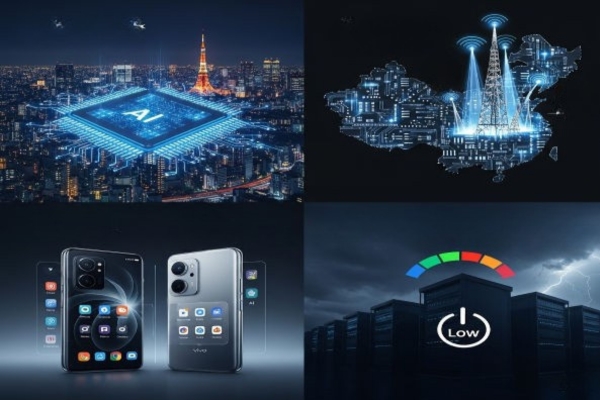
As we step into June 2025, the Asia technology sector is experiencing a dynamic interplay of innovation, investment, and geopolitical challenges. From significant strides in artificial intelligence and semiconductor development to regulatory actions and market shifts, the region’s tech landscape is rapidly evolving.
AI and Semiconductor Advancements
Intel and SoftBank’s Collaborative Venture: Saimemory
Intel and Japan’s SoftBank have reportedly formed a joint venture named “Saimemory” to develop low-power, high-performance stacked DRAM tailored for AI applications.
This initiative marks Intel’s re-entry into the memory business after its exit in 2022. With an initial investment of $70 million, Saimemory aims to produce memory solutions that consume less than half the energy of current products, positioning itself as a key player in the AI hardware sector.
China’s Push for Semiconductor Self-Reliance
When we talk about Asia technology sector then China needs to be in the headlines. China continues to bolster its semiconductor capabilities, aligning with its “Made in China 2025” strategy. Huawei is investing in advanced chipmaking chemicals, supporting ventures like Zhuhai Cornerstone Technologies to develop high-end materials such as photoresists.
Simultaneously, Xiaomi is designing its own smartphone chipsets to rival global competitors, signaling a significant shift towards domestic innovation in the semiconductor industry.
Asia Technology Sector and Smartphone Market Innovations
June 2025 Smartphone Launches
The smartphone market is buzzing with new releases this month:
- Infinix GT 30 Pro: Designed for gamers, offering high-performance features.
- OnePlus 13s: A compact flagship model combining power and portability.
- Vivo T4 Ultra: A mid-range device boasting flagship-level capabilities.
- Poco F7: Continuing the brand’s tradition of delivering strong performance at a reasonable price.
- Motorola Edge 60: Featuring a curved screen, robust camera features, and a clean Android experience.
These launches underscore the intense competition and innovation driving Asia’s smartphone industry.
Regulatory Developments and Market Dynamics in Asia Technology Sector
Japan’s Regulatory Action Against Google
In a significant move, Japan’s Fair Trade Commission has issued a cease-and-desist order to Google, accusing the tech giant of anticompetitive practices by forcing vendors to pre-install Google Play and Chrome on Android smartphones.
This marks Japan’s first legal action against a U.S. Big Tech company, reflecting growing global scrutiny over digital monopolies.
India’s Tech Sector Faces Economic Pressures
India’s leading IT firms, including Tata Consultancy Services and Wipro, are experiencing economic pressures due to global market turmoil and U.S.-driven tariff regimes and which is said to be a major development in the Asia technology sector.
These challenges are prompting clients to reassess discretionary projects, particularly in sectors like retail, automobile, and travel.
Investment Trends and Infrastructure Expansion
Surge in Asian Tech Fundraising
Talking about Asia technology sector, Citi projects a 10% increase in Asian tech fundraising in 2025, anticipating at least $77 billion in investments compared to $70 billion in 2024.
This growth is fueled by advancements in artificial intelligence and robust activities in India and Taiwan. AI-related funding across hardware supply chains and digital infrastructure is expected to dominate, reflecting the region’s commitment to technological innovation.
Addressing Data Center Shortages
Asia faces a potential data center capacity shortage of 15–25 gigawatts by 2028, according to research by CBRE. This anticipated shortfall underscores the urgent need for infrastructure expansion to support the region’s burgeoning digital economy.
Emerging Technologies and Initiatives
Huawei’s 5G-A Pioneers Program
At MWC Shanghai 2024, Huawei launched the Global 5G-A Pioneers Program, collaborating with operators worldwide to drive the development of advanced 5G-A networks. The program focuses on pioneering cities, business model upgrades, high-quality networks, service innovation, and thriving ecosystems, aiming to maximize the value of 5G-A capabilities.
India’s DIGIPIN Geocoding Initiative
India Post has introduced “DIGIPIN,” a geocoding scheme dividing the nation into a grid of 4m x 4m squares, each identified by a ten-digit number.
This initiative aims to enhance address precision, particularly in areas lacking traditional street names and property numbers, facilitating better resource management and service delivery.
Asia’s technology landscape in June 2025 is characterized by rapid innovation, strategic investments, and evolving regulatory frameworks.

