


By 2026, the use of artificial intelligence (AI) to make decisions about things for us instead of just helping us make our decisions has created a paradigm shift in how we view the clinical versus non-clinical oversight of these technologies.
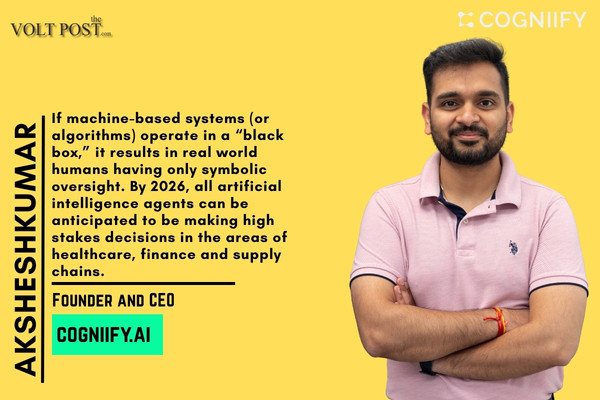
AI was contributing to many areas at that time, including predictive policing, surveillance systems, critical infrastructure, and autonomous software.
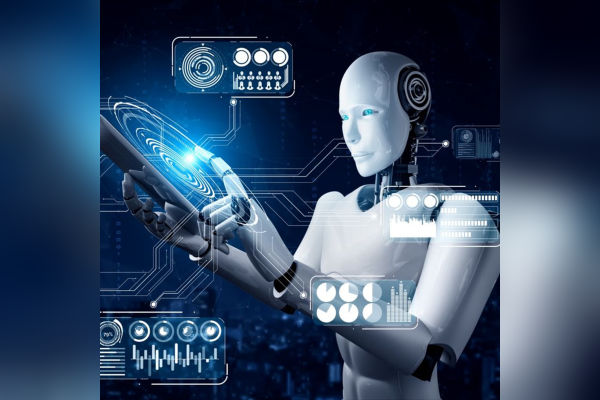
These insights are provided by Aksheshkumar Ajaykumar Shah, Founder and CEO of Cogniify.ai, who emphasizes that effective and appropriate human involvement in the management of AI through transparency, oversight, and the ability to intervene when necessary will continue to allow AI to be an effective resource that improves people’s lives, rather than replacing them with systems that operate independently.
- Evolution from Task-Master to Outcome Governor: As artificial intelligence becomes fully developed, we need to fundamentally think differently about the nature of human control over AI.
Instead of asking how machines carry out tasks, our focus will be on what kind of outcomes AI is made to generate; therefore, we must shift from having a role as task-masters to being outcome-governors who set guardrails, ethical limits, and performance measures, and we will not be obliged to supervise each and every action of the AI.
With this shift toward being outcome-governors enables AI to function with no human interaction but at the same time giving humans access to a greater capacity for complex/high-risk decision-making requiring context, belief, and responsibility for making those tough choices.
- Hardwired Explainability is the Only Real Control: In a world of ever-increasing autonomous AI, the only way to truly maintain control is through hardwired systems of explainability.
If machine-based systems (or algorithms) operate in a “black box,” it results in real world humans having only symbolic oversight. By 2026, all artificial intelligence agents can be anticipated to be making high stakes decisions in the areas of healthcare, finance and supply chains; therefore, the leaders of these industries demand that each decision made by an AI agent is auditable and has access to the specific reasoning behind each decision.
 This will allow for the same amount of scrutiny into machine-made decisions as there currently exists in regard to human-made decisions. Therefore, by embedding “reason codes” (in AI) into the decision-making architecture of AI agents, we will create a transition from reactive risk management governance systems to structural revenue drivers by rapidly building trust, adoption and scale for enterprises that implement AI.
- Neutralizing Risk in the “Virtual Playground”: In order to manage risks associated with AI, humans need to maintain control of AI systems by neutralising the risks before an AI makes a decision that will affect the real world. One of the main ways that can be done in the virtual world is through safe-to-fail control.
With Digital Twin as a Service (DTaaS), organisations can create thousands of what-if scenarios, which will help human designers determine systemic risks or unintended consequences ahead of time.
DTaaS can also be used to stress-test decisions, for example, against supply chain shocks, grid failures or fluctuations in the market. By utilising human-designed simulations before implementing AI decisions, organisations’ leaders can validate the actions of the AI.
- Strategic Oversight through Inference Economics: When an organisation does not have clarity on costs associated with the use of artificial intelligence (AI), there may be significant administrative burden placed on the organisation, with associated levels of inefficiency increasing.
This is referred to as the “cloud bill shock” phenomenon, where an enterprise cannot account for what it has spent on AI; this will become one of the largest risks to governance by 2026.
One way to gain strategic oversight of AI in the enterprise is to develop a command centre within the Finance Operations department that provides data on usage metrics.
- Preemptive Behavioral Security vs. Reactive Patching: As of 2026, the existing human approach to AI needs to trend from static ‘checklists’ towards an evolving ‘immunological-style’ adaptive framework particularly relevant in terms of preventative measures in relation to dynamic or adaptive behaviour security on one side, and reactive patching processes on the other; therefore human beings need to define ethical boundaries & security objectives, while the AI system utilises RT behavioural monitoring for the detection of: model corruption/inexistence; digital media deception; and malignant agent behaviour at the functional rate of transition measured by machines.
This is of critical importance in the context of India which is disparate in AI applications in such areas as FinTech, Digital Public Infrastructure & Governance. Furthermore, incorporating adversarial simulations of all adversaries will promote confidence; prove regulatory adaptability; and contribute to the long-term viability of a digitally transformed ecosystems.
 The final decision makers in strategic control of AI will continue to be humans and will use the continued oversight of ethical behaviour to ensure that AI can carry out their functions at an acceptable speed and timeline relative to modern day risks.
Instead of thinking of the future as only human, only AI, or could only be based on a rigidly controlled body of law, however, we envision a future where Humans are still in control of intents, responsibility and values while the AI executes these will intelligently and autonomously.
*All the opinions in this article are of Aksheshkumar Ajaykumar Shah, Founder and CEO of Cogniify.ai. The Volt Post takes no responsibility for the opinions, figures, and statistics mentioned in the article.*