



The 40-230 (PXI) and 42-230 (PXIe) models of Pickering Interfaces’ new series of high voltage programmable resistor modules, which come in a compact single-slot PXI and PXIe form factor, offer a straightforward solution for applications needing voltage handling up to 1.2kV.
The new module, which is a part of Pickering’s growing line of programmable resistor modules, comes in 70 standard builds, including four single-channel builds that provide a broad range of resistance ranges and resolution capabilities.
It is essential for simulating failure conditions and real-world resistive loads for high-voltage DUTs (devices-under-test) in the energy, automotive, and aerospace sectors.
High-voltage DUTs like EV (electric vehicle) power inverters, BMSs (battery management systems), and certain aerospace components depend on the 40/42-230 high voltage programmable resistor module to replicate real-world resistive loads and fault circumstances.
These modules can be used by engineers for vital jobs like voltage isolation check testing, which guarantees high-voltage systems operate safely and adhere to safety regulations like ISO 6469 and IEC 60664.
Without requiring the real sensor hardware, the module enables engineers to simulate resistance sensor values—such as those from thermistors and RTDs—in high-voltage settings, facilitating safe testing.
Each channel of the 40/42-230 can be configured to short and open circuit conditions for additional test coverage when used in hardware-in-the-loop (HIL) simulation testing of electronic control units (ECUs). This allows the controller to be tested in response to a malfunctioning sensor or connection.
The module provides multi-channel versatility, a wide resistance range (1? to 76.8M?) in a comapct single-slot PXI or PXIe form factor, resistance resolution down to 0.125?, and up to four channels accessible from a single slot.
The hardware interlock and simulation features of the module ease diagnostics and guarantee safety.
High-voltage test environments, such as those found in automotive electric vehicles and aerospace systems, applications that call for quick resistance reconfiguration, test systems with a limited number of PXI slots that require multi-channel modules, and HIL simulation platforms that require fault insertion are some of the key applications.
The 40/42-230 is available in 70 standard builds, including four single-channel builds that suit the most common configurations:
- Narrow resistance range version, available in 2 or 4 channel variants.
- Medium resistance range version, available in 1 or 2 channel variants.
- Wide resistance range version, available in 1-channel variants.
The use of resistor value calls simplifies software control. The resistance setting that is closest to the requested value is determined by the module and set. The actual setting utilized can then be found by the user by interrogating the module.
An extra cable assembly can be added to the module in place of the DUT to assist guarantee long-term accuracy. This would allow for easy calibration using a digital multimeter (DMM) to confirm the resistor channels.
The hardware interlock installed on the 40/42-230 high-voltage modules offers more security than standard software protection. When the interlock is triggered, it will notify users of errors through the software interface and return all relays to their initial unpowered condition, presuming the switches are operational.
One signal can disable several cards by daisy-chaining the interlock capability between further hardware interlock-enabled modules.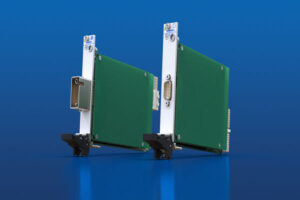
In contrast to many competitors, drivers are provided for Windows, Linux, and real-time operating systems. Pickering Interfaces guarantees long-term product support and offers a three-year warranty on all standard devices.
Leadership Comments
“Building on Pickering’s ongoing investment in sensor and battery simulation, this new range is one of a few PXI or PXIe modules that can handle voltages up to 1.2 kV, making it suitable for high-voltage environments like EVs, aerospace, or power electronics test benches,” said Stephen Jenkins, Simulation Product Manager at Pickering. “With the proliferation of high-voltage systems, engineers face significant challenges ensuring that high-voltage subsystems can safely function alongside low-voltage electronics. This module serves as an invaluable tool in meeting such demands.”
To Know More: CLICK HERE