From ECUs to Centralized Computing—How Automotive Innovation is Driving the Software-First Era
A Shift from Hardware to Code
The automotive industry is undergoing a tectonic transformation. At the heart of this shift is the redefinition of E/E (Electrical/Electronic) architecture, the nervous system of modern vehicles, which is transitioning from a hardware-centric design to a software-first paradigm. This transformation is enabling the rise of the Software-Defined Vehicles (SDVs)—a vehicle whose key features, user experiences, and even performance characteristics are increasingly governed by code rather than mechanical or hardware elements.
As this evolution gathers pace, automakers, Tier-1 suppliers, chipmakers, and software vendors are racing to build the modular, scalable, and secure platforms that will power the vehicles of the future.
The Legacy E/E Challenge: Too Many ECUs, Too Much Complexity
Traditional vehicles often feature 100 or more Electronic Control Units (ECUs)—small embedded computers dedicated to specific functions such as engine control, infotainment, ADAS (Advanced Driver Assistance Systems), or climate regulation.
While this distributed approach offered flexibility in integrating new technologies, it has resulted in high complexity, wiring bloat, and integration nightmares.
As automakers add new features like automated driving, over-the-air (OTA) updates, and immersive infotainment, the legacy E/E design becomes a bottleneck.
It’s simply not scalable or efficient for the kind of dynamic, upgradable functionality today’s customers expect.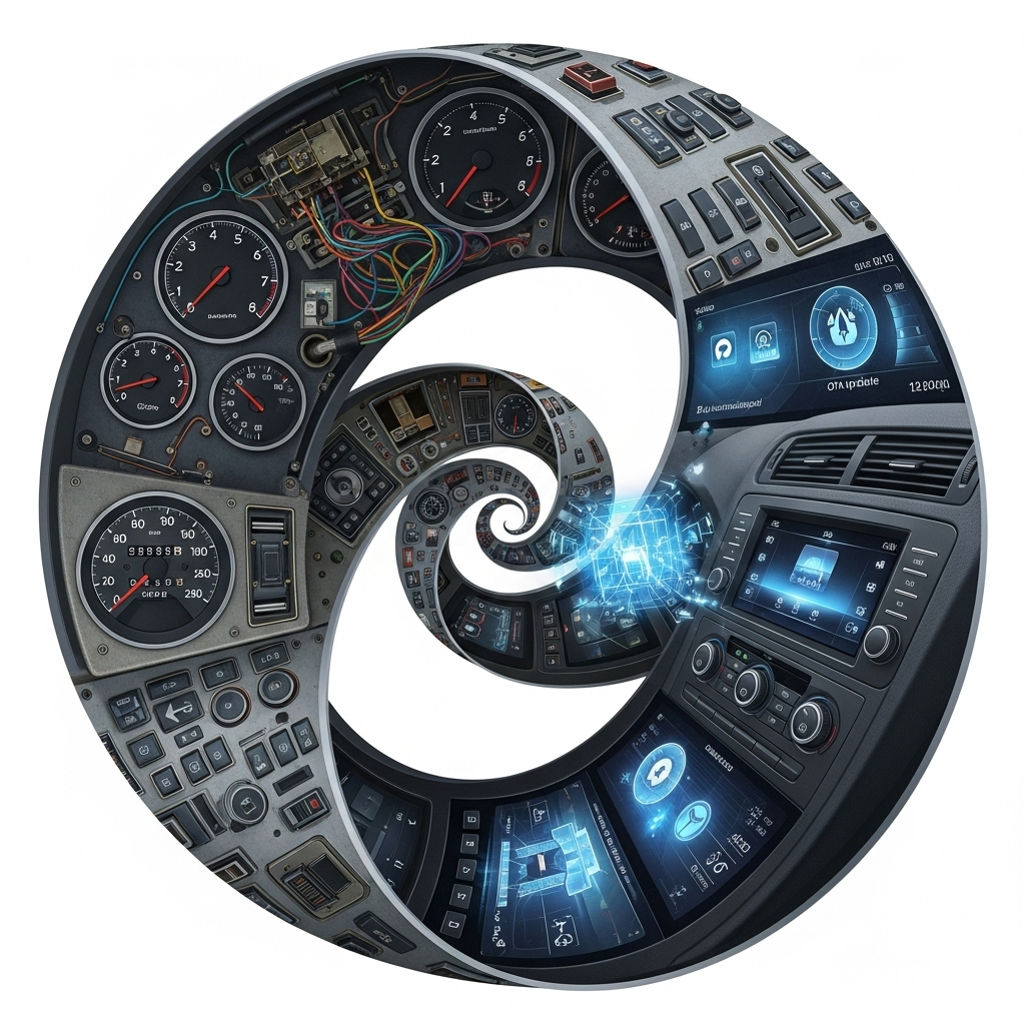
The New Paradigm: Centralized and Zonal E/E Architectures
Modern SDVs are adopting centralized or zonal architectures, replacing many ECUs with domain controllers or central compute platforms that consolidate processing power and reduce physical wiring.
Key Trends in E/E Architecture:
-
Zonal Architecture: Reorganizing ECUs by vehicle zones (front, rear, left, right) rather than function. This simplifies wiring and improves latency.
-
High-Performance Computing Platforms (HPCs): Centralized compute units running multiple vehicle domains, often powered by chips from NVIDIA, Qualcomm, or Mobileye.
-
Automotive Ethernet: Transitioning from legacy CAN/FlexRay protocols to Gigabit Ethernet for faster, deterministic communication.
-
Service-Oriented Architecture (SOA): Software modules communicating via APIs and services, making the vehicle system more modular and maintainable.
These architectural shifts are not just technical enhancements—they are strategic enablers for SDV business models.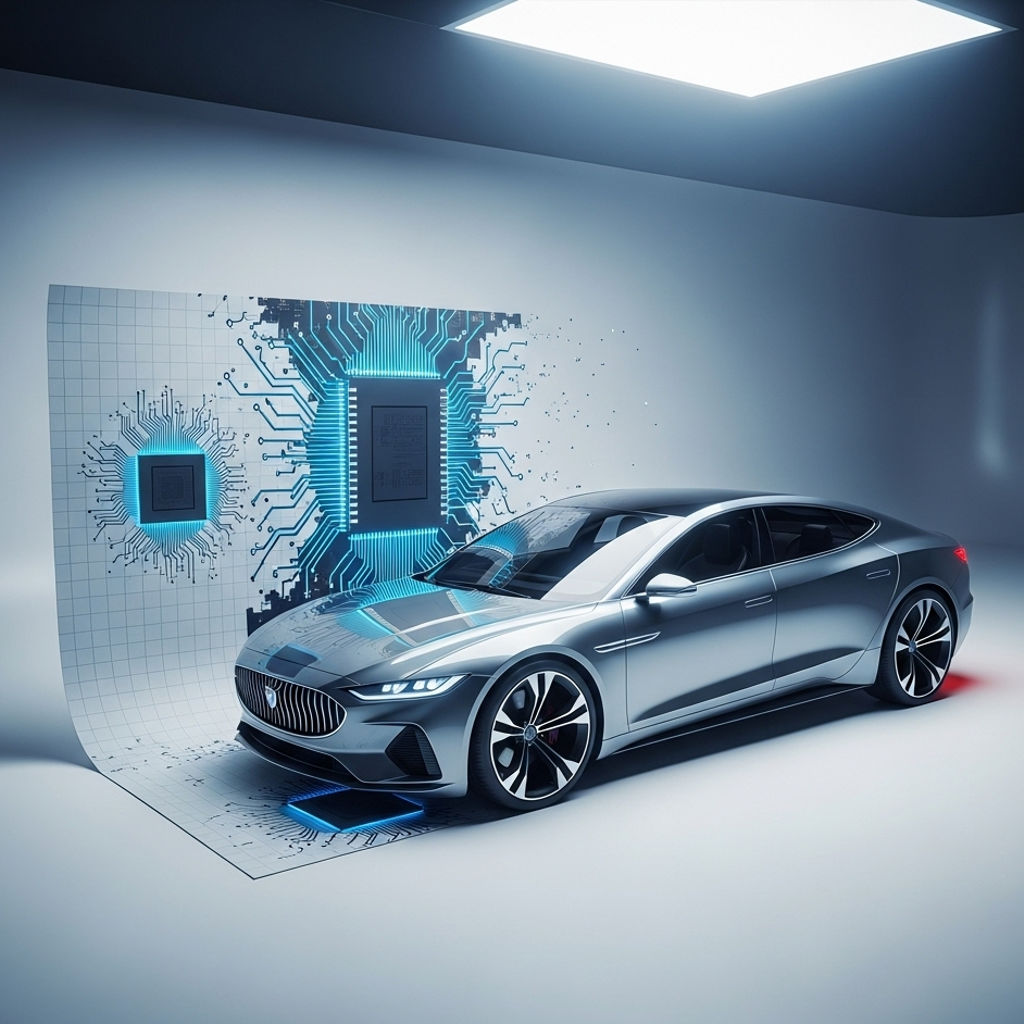
What is a Software-Defined Vehicle?
Software-Defined Vehicles are cars whose functionality, behavior, and user experience are primarily governed by software rather than hardware.
It’s a vehicle designed to evolve over time via Over-the-Air (OTA) updates, enabling new features, safety improvements, and even monetizable services post-sale.
Key Characteristics:
-
Continuous Feature Upgrades: Similar to smartphones, SDVs can gain new capabilities long after they roll off the assembly line.
-
Separation of Hardware and Software: Hardware abstraction layers allow OEMs to develop software independently of specific chipsets or sensors.
-
Data-Driven Development: Vehicles generate terabytes of telemetry data daily, feeding AI models and predictive maintenance systems.
-
Edge + Cloud Collaboration: Real-time decision-making happens at the edge (onboard the car), while large-scale learning and updates occur in the cloud.
Leading Players and Ecosystems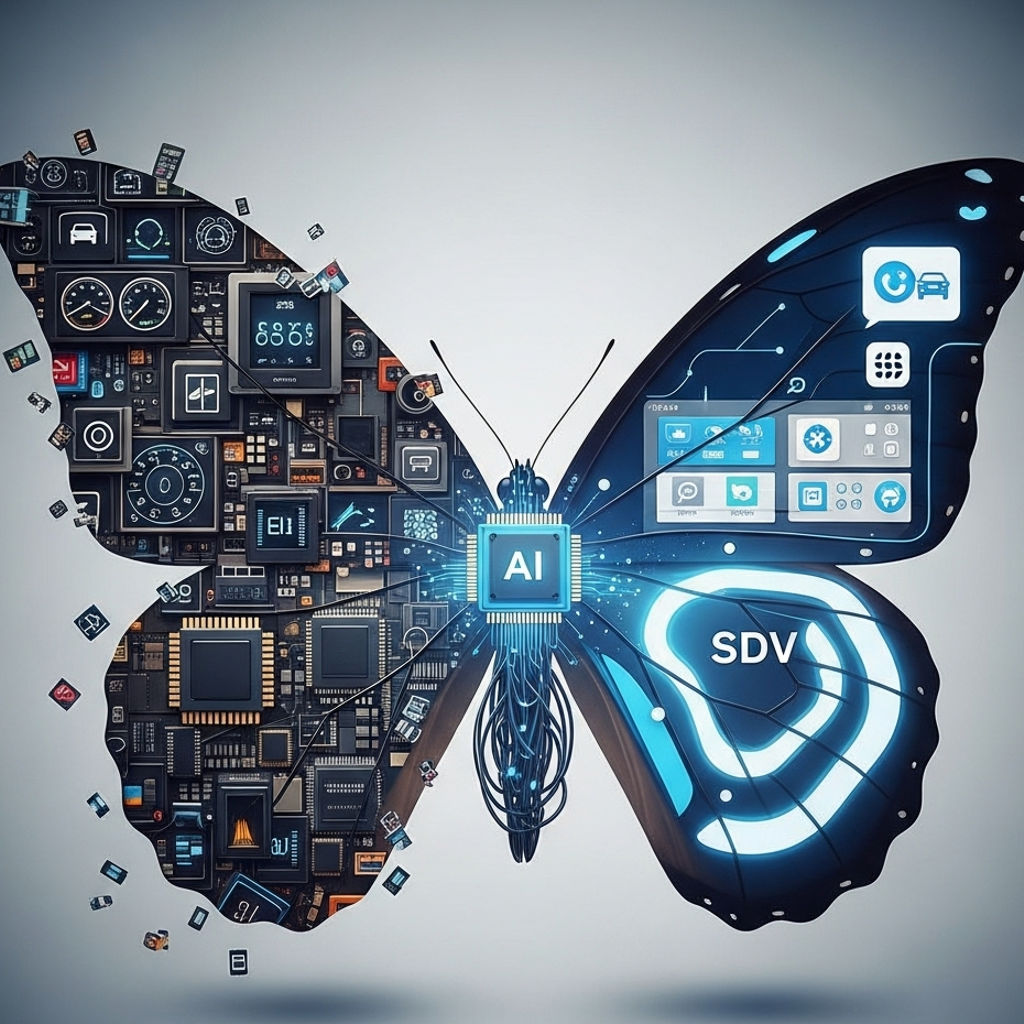
OEMs and suppliers are investing heavily in SDV platforms:
-
Tesla pioneered centralized compute and OTA updates, setting the benchmark for SDVs.
-
Mercedes-Benz MB.OS, Volkswagen CARIAD, and BMW iDrive 9 are building proprietary OS stacks with third-party partnerships (like Google or Amazon).
-
NVIDIA DRIVE and Qualcomm Snapdragon Ride are enabling AI-based perception and automated driving.
-
BlackBerry QNX, AUTOSAR, and SOAFEE are laying the groundwork for real-time, safety-critical software platforms.
-
AWS, Microsoft Azure, and Google Cloud offer cloud infrastructure for digital twin simulations, CI/CD pipelines, and fleet data analytics.
SDV Monetization: Beyond the Sale
The SDV model unlocks recurring revenue streams far beyond the traditional car sale:
-
Subscription Features: Heated seats, adaptive cruise control, or in-car entertainment systems can be offered via monthly fees.
-
In-Vehicle App Stores: OEMs can enable third-party apps—like navigation, video streaming, or even video conferencing—directly inside the car.
-
Usage-Based Insurance (UBI): Real-time driving data allows insurers to tailor policies and pricing.
Challenges on the Road to SDV
Despite its promise, the journey to SDV is not without roadblocks:
-
Functional Safety & Cybersecurity: ISO 26262 and ISO/SAE 21434 compliance is mandatory for systems where software bugs can cost lives.
-
Legacy Integration: Transitioning from legacy architectures to zonal designs is complex, especially for established OEMs with existing platforms.
-
Talent Gap: The automotive workforce needs reskilling in cloud software, DevOps, AI, and embedded programming.
-
Software Complexity: SDVs often run over 100 million lines of code—more than commercial aircraft.

Cars as Compute Platforms
The next decade will see vehicles transform from transportation machines into dynamic computing platforms on wheelsa and here what we can expect:
-
AI Co-Pilots: Generative AI powering voice assistants and predictive personalization.
-
Unified Operating Systems: One software stack controlling everything from driving to cabin ambiance.
-
Standardization and Open Source: Initiatives like Eclipse SDV, SOAFEE, and Scalable Open Architecture for Embedded Edge aim to reduce fragmentation.
Ultimately, the SDV trend is not just a tech upgrade—it’s a fundamental reimagining of the car, driven by a convergence of electrification, connectivity, and software innovation.
Conclusion
The automotive revolution is well underway. The shift in E/E architectures is enabling a new era where software defines the soul of the vehicle. For OEMs, this is a chance to reinvent the value proposition. For suppliers, it’s a wake-up call to evolve. And for consumers, it marks the beginning of truly intelligent, personalized, and connected mobility.